

 Tiếng Việt
Interior Design According to Feng Shui: What You Need to Know
Designing interiors according to Feng Shui (phong thủy) is a crucial matter prioritized by many homeowners when creating a sanctuary for their families. This is because a house designed correctly following Feng Shui principles is believed to attract wealth, fortune, and luck for all family members. In the article below, 3A Design will introduce you to all the A-to-Z information about Feng Shui in residential interior design so you can avoid common taboos!
What is Feng Shui in Residential Interior Design?
Feng Shui is essentially a scientific discipline, entirely unrelated to any superstition or belief, as many people mistakenly think. It is a doctrine that studies the influence of wind direction, water flow, and energy currents on human life, fortune, and misfortune.
In Vietnam specifically, and in East Asian countries generally, Feng Shui was applied by ancient monarchs to choose capital locations and city-building directions to ensure the nation’s prosperity, favorable weather, and peace for the people.
Today, Feng Shui is no longer limited to choosing land location and house direction; it is especially considered in residential interior design. A house with a Feng Shui-compliant interior not only brings the homeowner luck, peace, and abundant prosperity but also helps the living space become more harmonious and balanced.
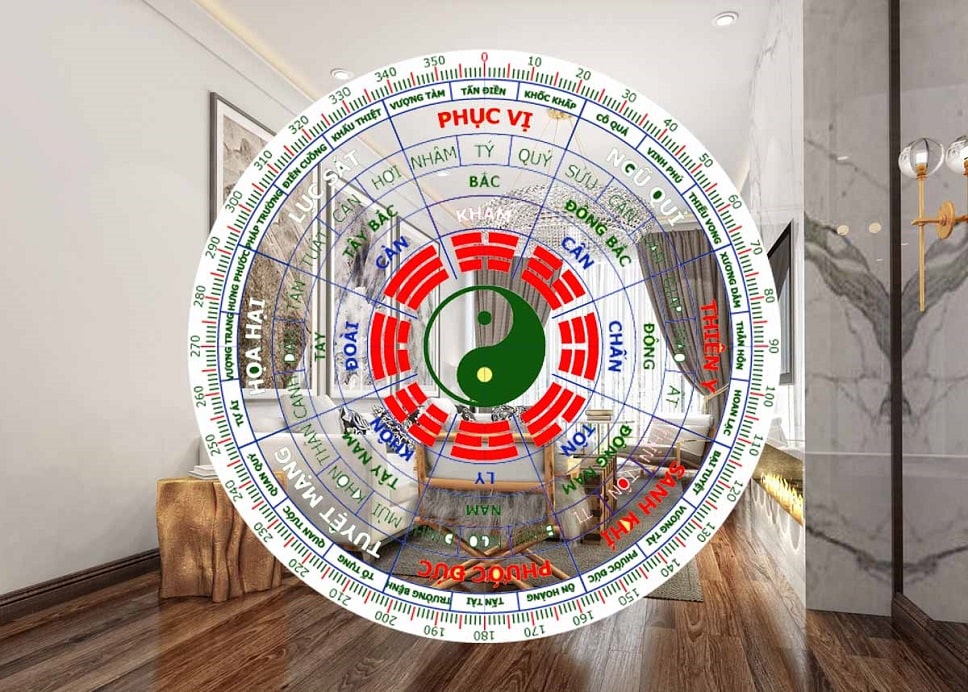
4 Criteria for Evaluating Feng Shui in Interior Design
Currently, there are many different styles for designing and arranging residential spaces, depending on the house’s area and the homeowner’s preferences and desired functional use. However, the homeowner needs to pay attention to the important criteria below right from the conceptualization of the design blueprint to ensure the interior space is fully compliant with Feng Shui principles.
1. Interior Design Must Align with the Homeowner’s Destiny
In addition to choosing the land and house direction according to the homeowner’s destiny (Mệnh), attention must also be paid to arranging the interior, space, and selecting items within the house to harmonize with the homeowner’s innate element, helping the family remain happy, peaceful, and successful.
To ensure the Feng Shui factor in the interior, you should avoid using furniture items that are too heavy or have too many sharp edges. Furthermore, add bright colors and incorporate greenery to bring vitality to the house.
2. Designing a Ventilated Space
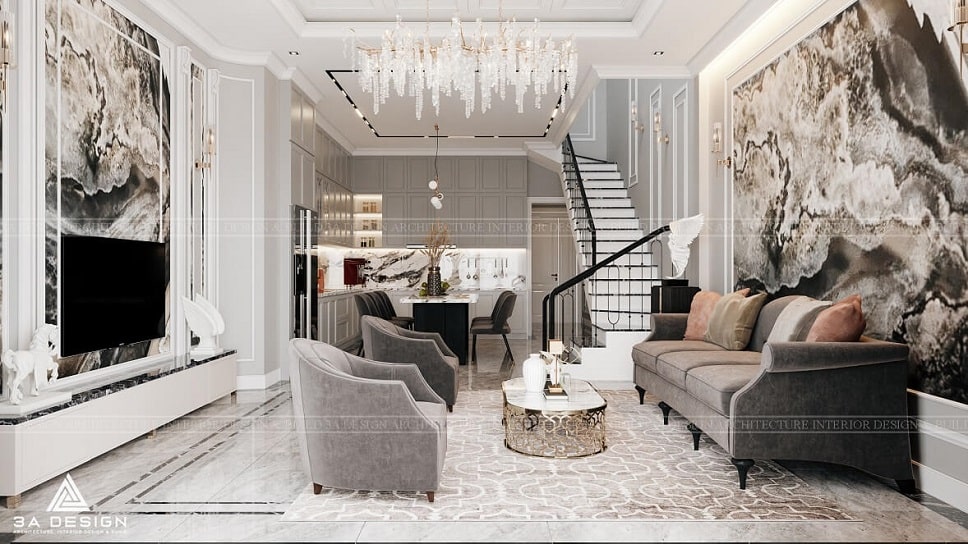
Feng Shui in interior design pays special attention to ventilation. According to Feng Shui, “Khí” (energy flow) is a symbol of wealth and fortune; the more open and prosperous the atmosphere in the house, the more luck and wealth the family receives.
However, to ensure the space is well-ventilated while maintaining Feng Shui compliance, you need to pay attention to a few things:
- If your house has many windows, the furniture must be arranged so that the air flow concentrates in the center of the room.
- For tube houses, you should not design the space so that the wind blows straight from the front to the back. This implies that wealth comes and immediately escapes, failing to gather and quickly dissipating.
3. Utilizing Natural Light Sources
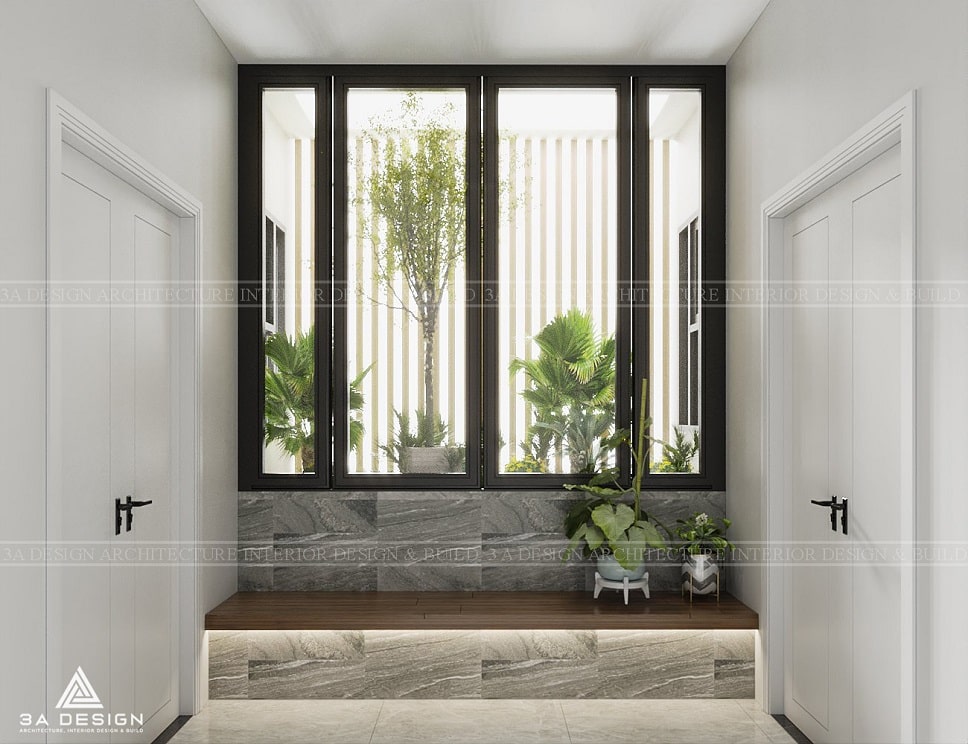
When designing interiors according to Feng Shui, you must ensure maximum utilization of natural light in the living space. According to Feng Shui principles: Natural light is highly beneficial for human health, helps dispel stagnant and gloomy air currents in the house, and brings smoothness and cleanliness to the home.
To keep the living space always filled with natural light, homeowners should install windows in functional rooms to welcome the most light. Even when choosing accessories like curtains, avoid selecting overly thick ones, as this obstructs natural light, making the space gloomy and stagnant.
4. Paying Attention to the Arrangement and Placement of Objects
Feng Shui in interior design utilizes eight directions that symbolize family, marriage, children, wealth, fame, helpful people, career, and knowledge. Therefore, when designing interiors according to Feng Shui, the arrangement of objects and furniture should be aligned with the most suitable direction based on the homeowner’s destiny and age.
For example, if the homeowner wants to attract wealth, they should arrange objects belonging to the Wood element in the Southeast direction, as the Southeast direction is associated with the Wood element . If the homeowner desires abundant health for themselves and their family, they should plant greenery in the East direction or display Feng Shui items of the Water element.
How to Design a House in Compliance with Feng Shui
The homeowner needs to arrange the interior appropriately according to Feng Shui principles for each space in the house. Specifically:
Feng Shui in Living Room Interior Design
The living room is the face of the house; thus, besides ensuring aesthetics and functionality, the Feng Shui factor must also be considered because it affects the fortune of the entire house.
Living Room Feng Shui for Homeowners with Metal Element
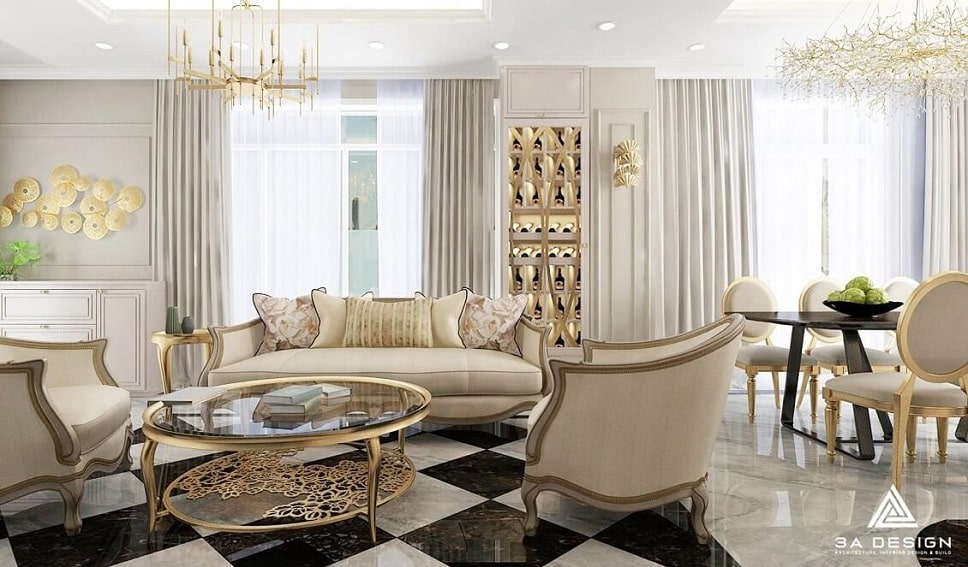
For homeowners whose element is Metal, the living room Feng Shui should use white as the dominant color, as this is their fundamental element color. However, if the interior space is entirely white, it will be very monotonous. You can combine it with yellow the mutually generating color for the Metal element along with materials like metal or ceramic/porcelain.
Feng Shui for the Living Room of a Water Element Homeowner
Two suitable colors for a Water element homeowner to design their home interior are blue and black. Blue is gentle and soft, while black is mysterious and elegant. The harmonious combination of these two colors brings sophistication and refinement to the living space. Because Metal generates Water, and Water generates Wood, homeowners should prioritize using wood and metal materials and limit the use of ceramic and porcelain decorations in the house.
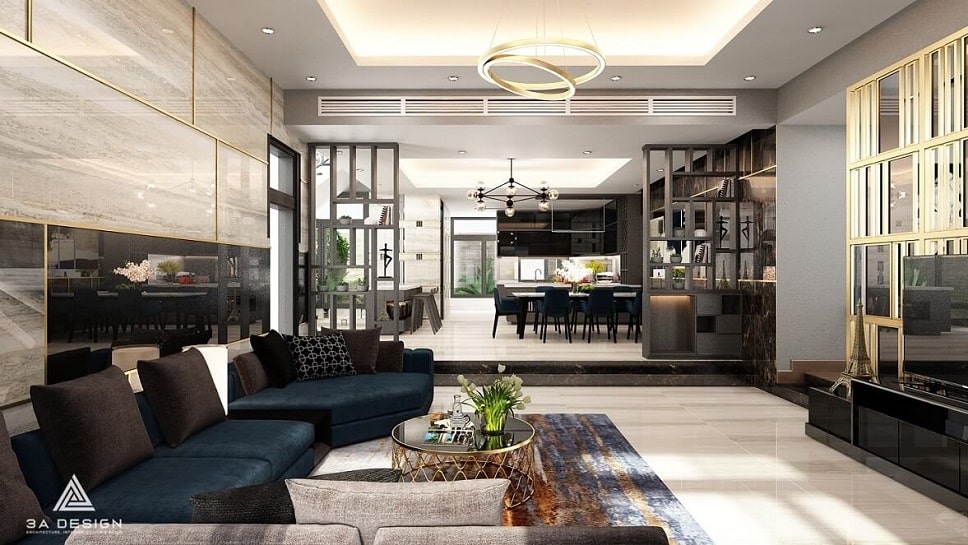
Feng Shui for the Living Room of a Wood Element Homeowner
The Wood element symbolizes nature and plants. Therefore, homeowners with the Wood element should use wooden furniture and plant many green plants to create good feng shui in their living room. Additionally, because the Wood element is compatible with the Water element, homeowners can design winding pathways like flowing water or place aquariums or glass water features in the living room. This is very beneficial for the growth and well-being of those with the Wood element.
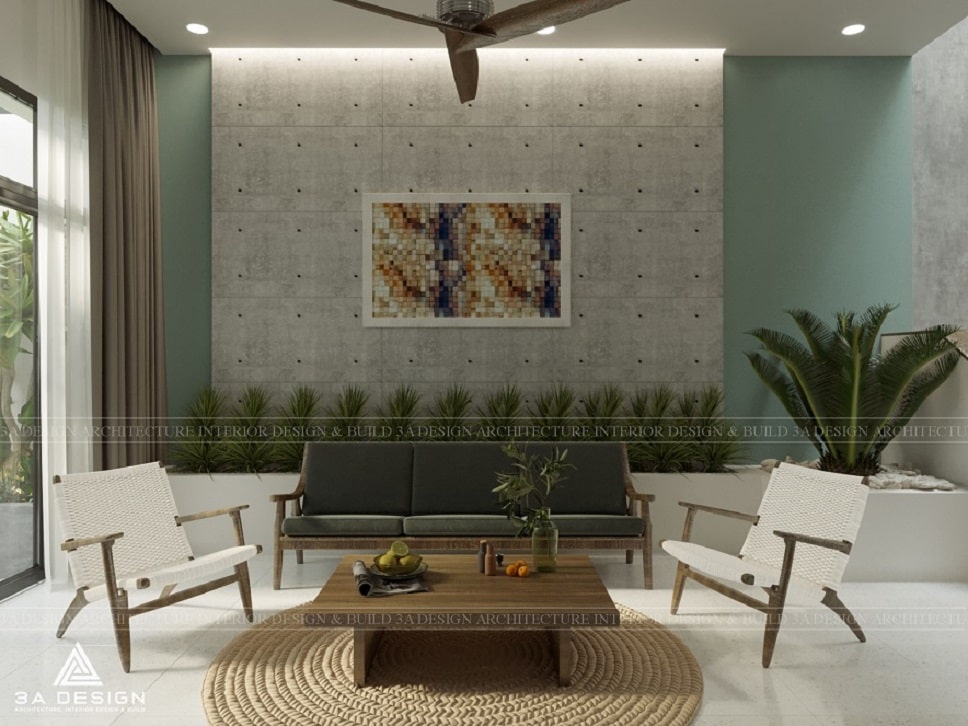
Feng Shui for the Living Room of a Fire Element Homeowner
For homeowners with the Fire element, feng shui in living room interior design should prioritize decorating with shades of red, pink, orange, and purple. However, a space filled only with warm colors can create a harsh, uncomfortable, and eye-straining feeling. Therefore, you can combine them with other colors to balance the space. For example, since Wood generates Fire, you can add green furniture to create a more harmonious and refreshing look for the room.
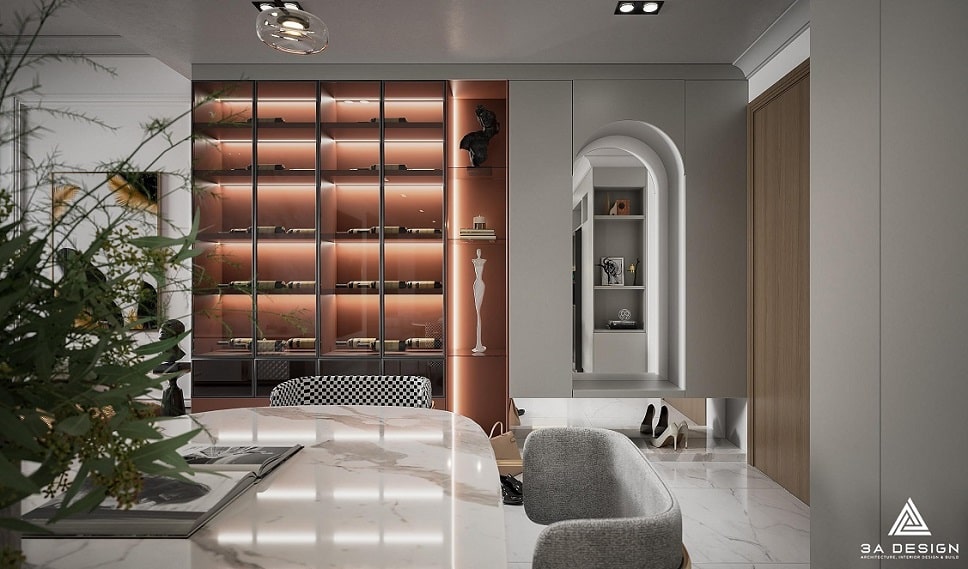
Feng Shui for the Living Room of a Homeowner with the Earth Element
According to feng shui principles, people with the Earth element are generally simple and have a gentle personality. Therefore, items in shades of yellow, golden brown, and earthy brown are very suitable for them. Additionally, you can combine these with the white color of the Metal element or the red, pink, purple, and orange colors of the Fire element, as these are all colors that are compatible and harmonious with the Earth element.
Regarding interior materials, homeowners should use natural materials such as wood, bamboo, reeds, and rushes to create a warm and rustic feel. On the other hand, because Earth clashes with the Earth element, homeowners should limit the use of green in interior design.
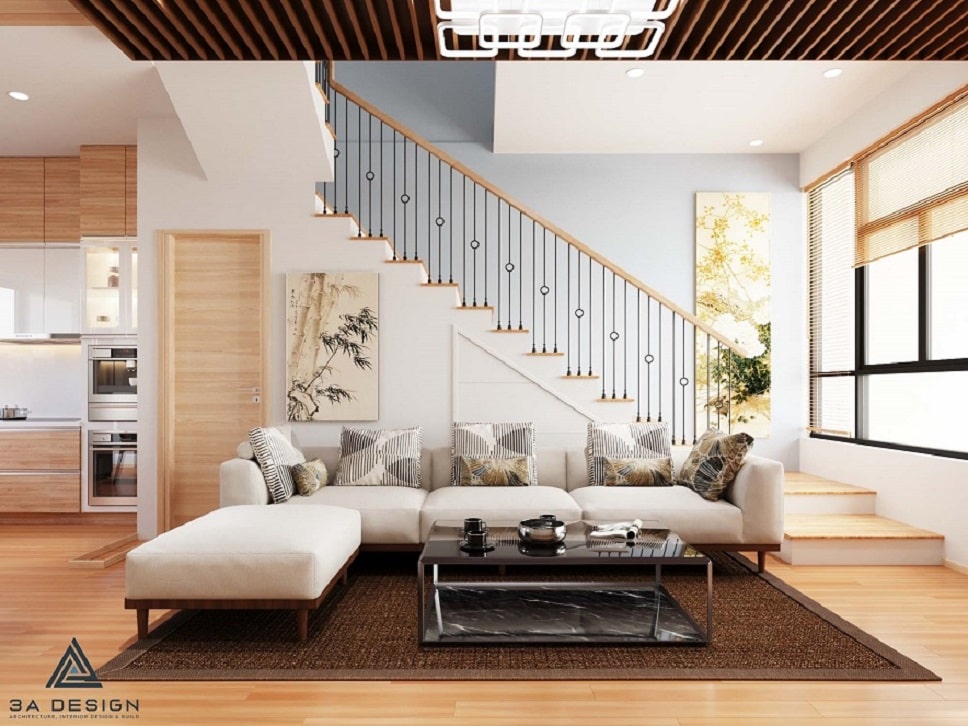
Kitchen Interior Design According to Feng Shui
To ensure good feng shui in kitchen interior design, homeowners should arrange the interior to create a clean, airy feel while still fostering warmth during family meals.
Choosing the Kitchen Orientation
In feng shui interior design, the kitchen should be located in the East or Southeast direction, as these two directions belong to the Wood element – which is compatible with the Water and Fire elements of the kitchen. The kitchen should not be placed in the South direction, as this direction belongs to the Fire element, which can easily cause irritability, anger, and trouble for the homeowner.
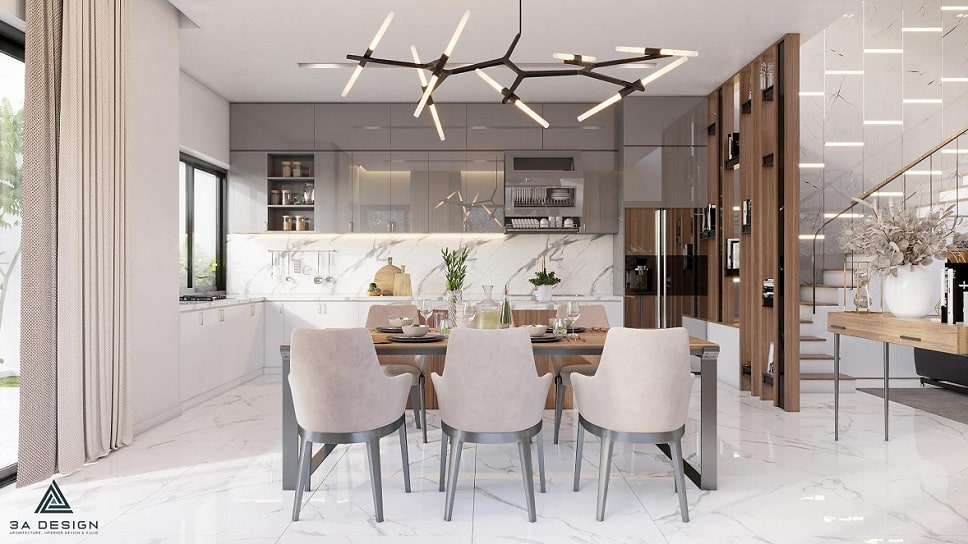
The kitchen should be positioned facing east or southeast.
Placement of the Stove and Sink
According to Feng Shui, the kitchen stove symbolizes the fire of love and warmth in the family. Therefore, the stove needs to be placed in a cool, well-ventilated area, and the cooking space should always be kept dry and clean. Conversely, the sink belongs to the Water element, which conflicts with the Fire element. Thus, the sink must be positioned completely separate from the stove to adhere to Feng Shui rules.
In addition, the placement of the stove and sink not only needs to follow Feng Shui in interior design but also must be designed to maximize convenience in the kitchen.
Arrangement of the Dining Table
The dining room and kitchen spaces are usually combined. The choice of table and chairs should be based on the homeowner’s preference. Furthermore, the dining set should match the overall Feng Shui color scheme of the house to prevent the space from looking mismatched or out of place.
Bedroom Feng Shui Interior
The bedroom is also an important space in the house as it is where family members rest after a long day of work and study. Therefore, when designing the bedroom interior, the homeowner needs to adhere to basic Feng Shui rules to maintain the spark of love and bring health, wealth, and family prosperity.
Bed Placement Direction
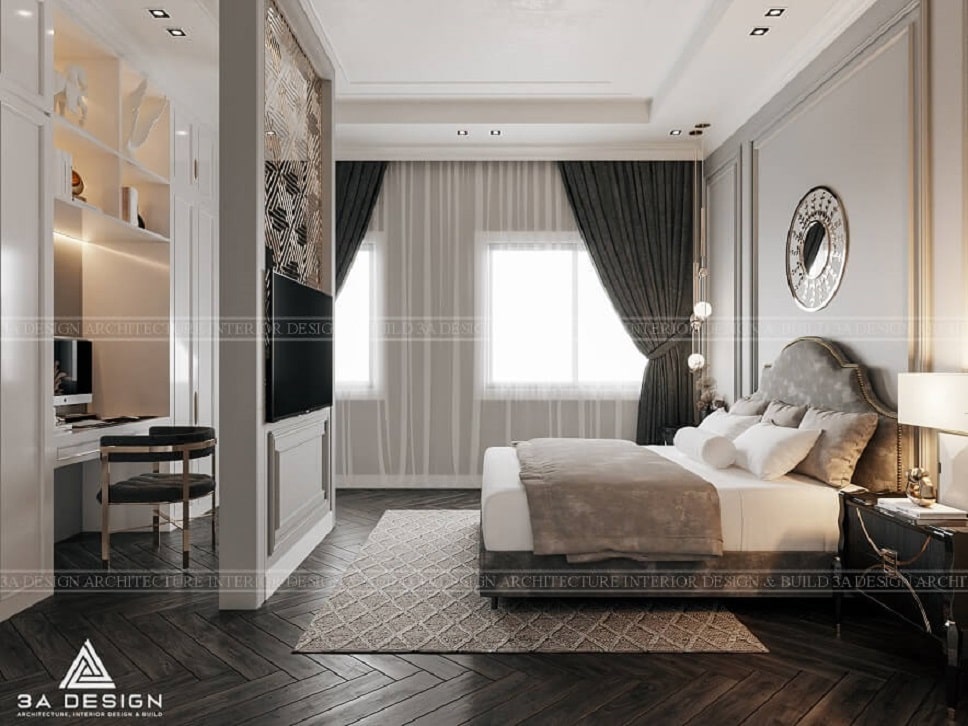
The direction of bed placement is a crucial consideration in Feng Shui interior design. The appropriate direction depends on each person’s personality and destiny. However, the homeowner must still observe the following basic rules:
- Do not place the bed beneath stairs or ceiling beams, as this is believed to negatively affect sleep.
- Do not place the bed directly opposite mirrors or objects with sharp corners.
- Position the bed out of alignment with the window and the entrance door.
- The headboard must be against a wall to create a feeling of stability and firmness.
Bedroom Bed Size
The selection of the bed size also needs careful consideration. Avoid choosing a bed that is too wide, as this can create a feeling of insecurity and emptiness, while also wasting room space. Conversely, choosing a bed that is too small will cause a cramped, confined, and uncomfortable feeling, negatively affecting the quality of sleep.
Bed Frame Height
When purchasing or designing a bed, you should only choose a bed with a moderate height bed frame. A bed that is too high is believed to negatively affect human health. Additionally, you can utilize the space under the bed to place drawers for storing blankets, sheets, pillows, or clothes. This method not only helps you optimize the use of space but also makes the room tidier.
Windows in the Bedroom
In Feng Shui for bedroom interior design, the window should be placed to the left or right side of the bed. It is strictly advised not to place the window directly opposite the bed, as this suggests the dissipation of wealth and money. Furthermore, lying directly opposite a window will affect your sleep quality due to morning light shining straight onto the bed.
See also: 3A Design’s comprehensive interior design consultation service
8 Notes on Interior Design According to Feng Shui
A beautiful home is one where the interior is not only appropriately arranged but also compliant with Feng Shui. Here are a few notes on Feng Shui in interior design:
- Avoid using sharp objects for decoration: Using sharp objects for decoration clearly creates negative energy (hung khí) in the living space, causing discord among family members, and potentially leading to conflicts.
- Do not use overly high coffee tables: It is preferable to choose low-legged coffee tables that are not taller than the seated person’s knee. In Feng Shui, the coffee table symbolizes the guest, and the sofa symbolizes the host. The coffee table must be lower than the sofa so that the guest does not overshadow the host.
- Do not place seats beneath ceiling beams (xà ngang): Placing chairs or sofas under a ceiling beam is a major taboo in Feng Shui interior design, as it creates a feeling of anxiety, insecurity, and confusion for the person sitting there.
- Do not place mirrors opposite doors or beds: This creates a feeling of restlessness for the person lying in bed, and over time, it will affect the health of family members.
- Do not place plants or fish tanks in the bedroom: The bedroom is a quiet space for rest. Placing plants or fish tanks will disturb the quiet atmosphere of the bedroom, negatively affecting the room’s owner.
- Do not place the bed directly beneath the window: Light shining directly from the window onto the bed will affect the quality of your sleep. You should change the direction of the bed or remedy it by using dark-colored curtains.
- Do not place the kitchen near the restroom/toilet: The kitchen symbolizes Fire (Hỏa), while the restroom symbolizes Water (Thủy). Fire and Water conflict with each other, so you must absolutely avoid placing these two rooms close together.
- Avoid placing the stove and sink close together: The Fire energy (Hỏa khí) from the stove and the Water energy (thủy khí) from the sink’s faucet system inherently conflict. You must absolutely avoid having the stove sandwiched between two Water elements, such as a refrigerator, faucet, sink, or washing machine.
The above information covers the most useful details about Feng Shui in interior design that 3A Design has compiled for you. However, designing interiors according to Feng Shui is not simple and requires a certain level of Feng Shui knowledge. To save time, effort, and cost, you should utilize the interior design services of 3A Design.
We always emphasize the Feng Shui factor in every design to provide suitable solutions, helping you create beautiful, comfortable, and prosperous structures. For any consultation needs, please contact 3A Design using the information below to receive detailed support from us.
3A DESIGN ARCHITECTURE AND INTERIOR CONSTRUCTION JOINT STOCK COMPANY
Head Office: 252 Bui Ta Han Street, An Phu Ward, Thu Duc City, Ho Chi Minh City
District 9 Office: E24 Park Riverside Residential Area, 101 Bung Ong Thoan Street, Phu Huu Ward, Thu Duc City, Ho Chi Minh City
Furniture Production Workshop: 441 Bui Cong Truong Street, Nhi Binh Commune, Hoc Mon District, Ho Chi Minh City
Phone: 0965 176 979
Email: info@3adesign.vn
Facebook: https://www.facebook.com/3adesign.vn/